
This guide will show you step-by-step how to use iron on patch for jeans and all the details in between. Jeans are indeed a classic piece of clothing, conventional, to the point, durable, and stylish, but even the most reliable pair of jeans will not be exempt from some amount of usage over a period of time. A few small holes, fraying at cuffs or hems, some fading around pockets and thigh, are typical for wearing jeans. Luckily here comes iron-on patches that can be used to give your clothing stylish looks. For washing, alteration, or embroidery, these patches can transform your jeans, and breathe a new life and character into them.
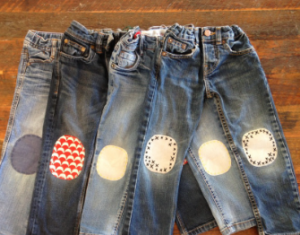
I. Understanding Iron-On Patches
You have a query how to use iron on patch for jeans, Heat seal patches are fabric patches that have adhesive on the back that gets activated by heat. When you apply heat, especially using iron the adhesive in the clasp melts and sticks to the fabric firmly. Iron-on patches are available in many designs, shapes, and even fabric, and can be used for both vandalization and mending of jeans.
Jeans patches are especially fashionable since they are simple to apply, long-lasting, and concentric. Unlike most sewn patches, they can be attached to the garment’s surface without the need for a sewing machine. When it comes to attaching patches to clothes, it is often possible to use adhesive patches while still having fewer opportunities than iron-on patches.
II. Choosing the Right Iron-On Patch for jeans
Care must however be taken to select the right type of patch that will give the right appearance and would also last long. Here’s what to consider:
- Size and Coverage: With a ruler, estimate the area on the jeans where the patch is to be fixed. Thus, with increasing area of the hole, the size of the patch also has to be large for the material to provide sufficient coverage. For minor rips or when using it for a form of aesthetics, small patches are appropriate.
- Material Match: Ensure you get sizes that well match the weight of the jeans you want to patch. Denim patches can be put on jeans because they harmonize well and wear similarly. However, if you want something even more eye-catching, then things like leather, embroidered, or fabric-based patches are the additional style.
- Design Choice: You can imagine, there is a huge variety in terms of colors and designs, starting from the patch, which is as captured as it can be. If you want to make it invisible, there is no better option than selecting a piece that is in the same color scheme as the jeans you are wearing. Boldness can be achieved by either experimenting with different shapes or even blowing up the color choice.
III. Preparing Your Jeans for Patching
Preparation is crucial so that the patch will stick properly to the surface of the fabric. When planning to patch an area, first look at the area that requires patching. If there are any fuzzy or jagged edges around the tear, need to cut it off. Subsequently, wash the jeans trying to do it without the use of a detergent that would prevent the jeans from sticking to the wall. number: After washing, assemble items such as an iron, a pressing cloth as well as an ironing board.
IV. Applying the Iron-On Patch
Now comes the main step: How to iron on patch for jeans. Follow these steps to ensure a strong bond:
Position the Patch: Put them over your preferred area such that they cover the tear and fit well. For aesthetic reasons, it is used where it blends with the prevailing theme.
Cover with a Pressing Cloth: Using a pressure or a thin cotton cloth in-between the floor patch and the iron prevents the burning of fabric since it would also spread the heat. After that apply a pressing cloth over the patch then press it using an iron.
Set the Iron Temperature: Default your iron to high power and set it on ‘cotton’ without any kind of steam production. Heat will engage the adhesive, nevertheless, steam can hamper a proper conjoin.
Apply Heat: Put the iron strongly over the patch hold the pressure for about 15-20 seconds and then pull it off. Repeat for as long as necessary to cover all the edges of surfaces and press down till all the edges stick well.
Check and Repeat: Finally, let the ironed area cool for about 5-10 minutes before peeling the edges to be sure they’ve stuck well. Reapply heat if needed.
Some bad habits related to use include the utilization of steam, walking around with the iron or not even holding the iron down enough.
V. Caring for Your Patched Jeans
Proper care also increases the useful juice of both your jeans and the patch. Do not wash your jeans with the patch directly facing outwards as this will cause the patch to peel or lift off the fabric: wash your jeans inside out on a gentle cycle and in cold water. Do not use a dryer as the heat is destructive to the adhesive part of the bag. Instead, air-dry your jeans. Your patched jeans will not only look good, but they will be durable if proper care is applied in the right manner.
VI. Creative Ways to Use Iron-On Patches
Of course, iron on patch for jeans are so much more than a practical addition; they are also a great way to make jeans more individual. Here are some creative ideas:
- Personalize with Multiple Patches: Instead of using only one patch, layer several of them into a single garment in order to achieve a more personal appearance. Sew on embellishments at the knees, pocket area, or back, which will create an individual style.
- Cover Larger Areas: If the jeans have areas that are beyond repair, use the patches several times on the damaged areas. This can transform an old pair of shoes or boots or sneakers into an art piece.
- Themed Designs: Connect them and have a single design by picking patches that have the same hue, or design type. For instance, one could append floral patches, or vivid logos or geometrical patterns for consistency.
VII. Troubleshooting Common Issues
There are two main reasons why your patch is not adhering properly – there is not enough heat or the pressure used is not equal. Apply heat over the nap with the iron again pressing with a pressing cloth with hard pressing over all areas. In the case of hanging threads, one can use fabric cement or overstitch the edges of the patch slightly. If it still fails to stick, stitches can be put in by a professional tailor to ensure the patch is in its proper place.
VIII. Inspiring Examples and Trends
Patchwork jeans are the latest trend and now big brands and famous influencers are seen in those jeans. Of the most usual designs, it is possible to have a knee area embroidered for a wild look or have patches around the bottom of the apparel for a playful look. Search for references on social networks and look at how people use patches in minimalistic or bright manners.
IX. Conclusion
Iron on patch for jeans are one good idea since they can both fix the jeans’ flaws as well as add other artistic designs that appeal to the user. Starting from the simplicity of adjusting the patch to the possibility of various designs, patches on jeans make it possible to change and diversify the image. If taken care of and with some imagination, patched jeans can be a cute outfit and a great way to reuse a favorite pair of pants. Just like the files in a folder are organized, clothing items may also be arranged through patching and you should try out various patch styles, positions, and even designs to achieve your preferred style.